
6900 E US Highway 60
Suite 110
Gold Canyon, AZ 85118
6900 E US Highway 60
Suite 110
Gold Canyon, AZ 85118

Modern materials and improved clinical techniques make replacing missing teeth more reliable and natural than ever. While fixed bridgework and dental implants provide durable, long-term options for many patients, removable dentures remain a practical and well-established way to restore a complete smile for people of all ages.
At the office of Contemporary Dentistry, we craft dentures using proven materials and careful attention to fit and function. Our approach focuses on restoring facial support, comfortable speech, and efficient chewing while creating an appearance that looks natural and age-appropriate.
We take a patient-centered approach to prosthetic dentistry, listening to each person’s goals and designing options that reflect their oral health, daily habits, and aesthetic preferences. The result is a personalized plan that aims for reliable performance and long-term satisfaction.
Losing one or more teeth doesn’t just leave a visible gap — it changes how the entire mouth functions. Missing teeth can disrupt chewing patterns, alter speech, and shift the forces that keep remaining teeth aligned. Over time, those changes may lead to additional wear, shifting of neighboring teeth, and further dental problems if not addressed.
Beyond the mechanical effects, tooth loss often affects the way the lower face looks and feels. Teeth support the cheeks and lips; without them, facial contours can lose height and fullness, producing a prematurely aged appearance. Replacing teeth with well-designed dentures restores that support and helps preserve a natural profile.
There are also practical day-to-day consequences. Chewing efficiency can be reduced, which may make it harder to enjoy a variety of nutritious foods. Speech patterns can change when teeth or their supporting structures are absent. Timely restorative care helps minimize these impacts and improves quality of life for many patients.
Dentures are removable prostheses made to rest comfortably on the gums and recreate the appearance and function of natural teeth. They consist of artificial teeth set into a supportive base designed to follow your mouth’s unique contours. Properly made dentures balance aesthetics with biomechanics, so they look natural and work well for speaking and eating.
Unlike fixed restorations, removable dentures allow access to the underlying tissues and any remaining natural teeth for ongoing cleaning and monitoring. This removability also makes maintenance straightforward — the appliance can be cleaned outside the mouth and the tissues inspected for health and fit.
Dentures are versatile. They can replace a few missing teeth with a partial appliance or restore an entire arch with a complete denture. When appropriate, specialized attachments or implants can be used to increase stability and reduce movement, combining the benefits of removable prosthetics with enhanced retention.

Choosing the right denture style begins with a careful clinical evaluation of the remaining teeth, gum tissues, and jawbone. The practice will review your overall health, oral condition, and personal goals to recommend an approach that fits your situation. There is no single option that suits everyone; treatment is individualized.
Removable prosthetics generally fall into two categories: full (complete) dentures, which replace an entire arch, and partial dentures, which fill spaces where some healthy teeth remain. Each category includes variations that address timing, support, and retention based on a patient’s anatomy and expectations.
When planning a denture, we consider how the appliance will interact with speech, bite alignment, and facial contours. The design phase includes selecting tooth shape and shade, determining proper tooth position, and creating a base that supports soft tissues without causing unnecessary pressure or irritation.
Full dentures recreate a complete arch when all teeth in the upper or lower jaw are missing. They are carefully contoured to distribute biting forces across the supporting tissues while restoring the height and width of the face. Properly balanced occlusion and positioning are essential to comfortable function.
A conventional full denture is provided after any necessary extractions and after the gums have healed sufficiently. Fabricating the prosthesis after tissues have stabilized often results in a more accurate fit and predictable comfort over time.
Immediate Denture
An immediate denture is placed at the same appointment as extractions so the patient never goes without teeth. While it preserves appearance and function during healing, tissue changes during recovery may require follow-up adjustments or a future refit for optimal long-term comfort.
Overdenture
An overdenture gains support by fitting over retained natural tooth roots or specially placed abutments. This approach preserves bone and provides improved stability while keeping the appliance removable for hygiene.
Implant-Supported Dentures
Implant-supported dentures attach to strategically placed dental implants for increased retention and resistance to movement. This option can dramatically improve chewing efficiency and comfort, particularly for lower-arch prostheses that otherwise can be less stable.
Partial dentures bridge gaps left by multiple missing teeth while using healthy adjacent teeth for support. They help maintain proper tooth alignment by preventing nearby teeth from drifting into empty spaces and can restore chewing ability in a conservative, removable format.
Partial frameworks can be made from a variety of materials, including traditional cast metal, flexible resin, or hybrid options. The choice of material and attachment style depends on preferences for strength, visibility, and comfort as well as the specific oral conditions present.
A well-designed partial denture not only fills esthetic gaps but also contributes to the long-term stability of the remaining dentition and preserves functional balance across the mouth.
At every step, the practice focuses on creating a denture that looks harmonious with your facial features and performs reliably in everyday activities.
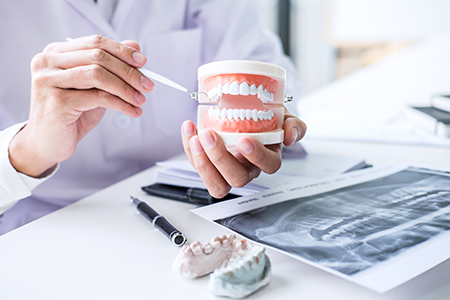
Crafting a comfortable, aesthetically pleasing denture requires careful planning and precise clinical work. Initial appointments usually include a thorough oral exam, review of medical history, and diagnostic imaging when needed to assess bone and tissue conditions that affect prosthesis design.
Impressions and bite records are taken to reproduce your oral anatomy accurately in the lab. Trial fittings allow adjustments to tooth position, bite relationships, and overall appearance before the final denture is finished. This iterative process helps ensure the final appliance meets functional and cosmetic goals.
Sometimes preparatory procedures are recommended to improve tissue contours or address problem teeth before prosthesis fabrication. Once the denture is delivered, the practice schedules follow-up visits to verify fit, relieve sore spots, and fine-tune occlusion so that speech and chewing feel natural.
We combine clinical experience with modern techniques to align esthetics, comfort, and durability. The end result is a prosthesis designed to integrate with your lifestyle and oral health needs.

Adapting to a new denture is a process. Minor soreness, changes in saliva flow, and altered speech patterns are common in the early days as the mouth adjusts. These effects are typically temporary and can be managed with brief adjustments and guidance from the clinical team.
Adjusting to a new denture
New dentures may require a few appointments for fine-tuning. If an area feels sore, wearing the denture for a short time before adjustments helps the clinician identify the precise points needing relief.
More saliva than usual
A temporary increase in saliva production is a normal response to a new appliance. This typically subsides as the mouth becomes accustomed to the prosthesis.
Speaking with ease
Changes in diction are common at first. Practicing by reading aloud and speaking in normal daily situations helps accelerate adaptation and restores comfortable speech.
Getting used to eating with a denture
Begin with softer foods and bite using both sides of the mouth. Over time, as confidence and muscle control improve, most people return to a broadly varied diet.
Taking care of your dentures
Rinse dentures after meals and brush them daily with a brush designed for prostheses. This removes food debris and reduces staining and bacterial buildup. Soak the appliance overnight or as recommended to preserve its shape and cleanliness.
Clean any remaining natural teeth, along with gums and the roof of the mouth, to keep tissues healthy. Good oral hygiene supports the longevity of both teeth and dentures.
Remove dentures at night to allow the gums and bone to recover. Regular rest periods help reduce irritation and support tissue health.
Added stability
Some dentures benefit from additional retention, whether through carefully selected adhesives, precision attachments, or implant support. These measures can make a significant difference in comfort and confidence for many wearers.
Follow-up care
Routine dental visits allow the clinician to assess fit and oral health. At these appointments, the condition of any remaining teeth and the supporting tissues is reviewed to ensure the prosthesis continues to perform as intended.
Relines
As the underlying tissues naturally change over time, relines can restore a snug, comfortable fit. Periodic adjustments and maintenance help extend the functional life of a denture.
Contemporary Dentistry is committed to helping patients understand their options and achieve predictable results. If you’re considering denture therapy or have questions about your current prosthesis, please contact us for more information.

Today, it’s easier than ever to replace missing teeth and achieve natural-looking, durable, and long-lasting results! Depending on a patient’s dental needs, lifestyle, expectations of care, and budget, choices can include conventional fixed bridgework, dental implants, or removable partial and complete dentures. At the office of Contemporary Dentistry, we’ll discuss all your options in care and answer all your questions as you choose the solution that’s right for you.
With advances in dental materials and technology, today’s dentures are more comfortable and realistic-looking than ever before.
Whether you wear partial or complete dentures, it’s essential to see the dentist for routine care. Besides checking the fit and condition of your dentures and making any necessary adjustments, you’ll also receive a comprehensive exam to check on the health of any remaining teeth as well as the soft and hard tissues in and around the oral cavity.
A same-day denture offers an accelerated design and fabrication process that allows a patient to go from impression taking to denture insertion in a single day.
For patients who don’t want to wait after having teeth extracted, an immediate denture can be inserted the same day your teeth are removed. Sometime later you may need the denture relined to address any changes in its fit once the extraction sites have completely healed.
While no one wants to drop or break a partial or complete denture, accidents do happen. The good news is that in some cases, your partial or complete denture is reparable. It all depends on the extent of the damage. Don’t hesitate to contact our office if you’ve broken or damaged your denture. We’re happy to help.
The simple act of taking your partial denture in and out can cause certain types of metal clasps to loosen over time. When you come in for your checkup visit or contact our office for an adjustment, we’ll assess the fit of your partial and tighten the clasps for improved stability and comfort.
While rebuilding a complete smile is a worthwhile investment, our office is sensitive to the costs involved in dental care. We customize care and will discuss which treatment options address your needs, lifestyle, and budget. How much a new denture will cost depends on the type of the prosthesis, its design, and the materials used to fabricate the supportive base, teeth, and clasps or precision attachments. Dentures that include the placement of dental implants for added retention and stability typically involve additional costs.
If you have dental insurance, your coverage may include a new or replacement set of dentures. Our staff is happy to review your coverage with you to ensure you are maximizing your insurance benefits while minimizing any out of pocket expenses.
At the office of Contemporary Dentistry, we provide an extensive range of dental services, including the latest and most effective methods to help patients with missing teeth rebuild complete and beautiful smiles. As skilled and experienced professionals, we recognize that every patient is different, and every smile is unique. We’re passionate about what we do and take great pride in providing personalized treatment plans while treating our patients as valued partners in care.
Dentures are removable prosthetic devices that replace missing teeth and the surrounding tissues. They consist of artificial teeth set into a custom-shaped base that rests on the gums and distributes chewing forces across the mouth. Properly fitted dentures restore the appearance of a natural smile while supporting facial contours and oral function.
Functionally, dentures recreate tooth surfaces for biting and chewing, help maintain speech patterns, and provide support for lips and cheeks to preserve facial height. Because they are removable, dentures allow direct access to oral tissues for cleaning and monitoring. With careful design and periodic adjustments, a denture can serve reliably as part of a long-term oral health plan.
Needing dentures is typically related to the number and condition of missing teeth and how those losses affect daily life. Signs that dentures may be appropriate include difficulty chewing a variety of foods, noticeable changes in facial support, or progressive shifting of remaining teeth that compromises bite alignment. Your dentist will evaluate your oral health, bone and gum conditions, and functional goals to determine whether a removable prosthesis is a suitable option.
Partial dentures are often recommended when several teeth are missing but healthy teeth remain to provide support, while full dentures restore an entire arch when all teeth in that arch are absent. The decision also considers medical history, oral hygiene, and patient preferences for maintenance and appearance. A comprehensive exam and discussion with the clinical team will clarify the best treatment pathway for your needs.
Removable prosthetics generally fall into two main categories: full (complete) dentures and partial dentures. Full dentures replace an entire arch of teeth and are contoured to restore face height and distribute biting forces, while partial dentures bridge gaps left by multiple missing teeth and use healthy adjacent teeth for support. Within these categories there are variations such as conventional, immediate, and overdentures that address timing, support, and tissue preservation.
Modern options also include implant-supported and implant-retained dentures, which use dental implants to improve stability and chewing efficiency. Materials and framework choices for partials range from traditional cast metal to flexible resins depending on strength and esthetic priorities. Your dentist will recommend the style that best balances comfort, function, and appearance for your situation.
Our denture process begins with a thorough oral examination and diagnostic records to evaluate bone, tissue contours, and remaining dentition. We use precise impressions and bite records to capture your oral anatomy, then perform trial fittings to evaluate tooth position, occlusion and esthetics before final fabrication. This stepwise approach helps ensure that the finished prosthesis meets functional needs and blends naturally with your facial features.
During delivery we verify fit, adjust pressure points, and fine-tune bite relationships so speech and chewing feel comfortable. Follow-up visits allow us to relieve sore spots and make adjustments as tissues settle, and we recommend routine checkups to monitor oral health and prosthesis performance. When appropriate, we also coordinate implant options to enhance retention and long-term stability.
Adjusting to new dentures varies from person to person but typically takes several weeks of gradual adaptation. Early effects such as minor soreness, increased saliva, and slight changes in speech are common and usually resolve as the mouth adjusts and muscle control improves. Regular short periods of wear combined with targeted adjustments by the clinician help accelerate comfort and function.
Speech can be retrained by practicing reading aloud and speaking in everyday situations, and eating is best approached by starting with softer foods and biting with both sides of the mouth. Over time most patients regain broad eating ability and normal speech patterns, though ongoing adjustments or relines may be needed to maintain optimal fit. Maintaining follow-up care ensures any persistent issues are identified and addressed promptly.
Daily cleaning is essential to keep dentures hygienic and to preserve their fit and appearance. Rinse dentures after meals to remove loose debris, brush them gently each day with a brush designed for prostheses and use a soaking solution as recommended to remove stains and reduce bacterial buildup. Avoid hot water and household cleaners that can warp or damage the denture base.
It is equally important to care for the gums and any remaining natural teeth by brushing and flossing, and by massaging or rinsing the oral tissues to promote circulation and tissue health. Remove dentures at night to allow the mouth to rest, and bring the prosthesis to dental visits so the clinician can inspect the device and oral tissues. Regular professional reviews help detect wear, changes in fit, and opportunities for maintenance such as relines.
Yes, implant-supported and implant-retained dentures use strategically placed dental implants to increase retention and reduce movement. Implants provide a secure anchor that improves chewing efficiency and comfort, particularly for lower-arch prostheses that are more prone to instability. Depending on the case, implants can support a removable overdenture or a fixed prosthesis, offering a spectrum of stability and maintenance options.
The candidacy for implant assistance depends on bone volume, medical history, and patient goals, and the clinical team will evaluate these factors during planning. When implants are part of the plan, the workflow includes imaging, surgical placement, healing time for osseointegration, and connection of attachments before the final prosthesis is delivered. This combined approach blends the benefits of removable dentures with the added reliability of implant support.
The fitting process begins with a comprehensive exam, medical and dental history review, and diagnostic imaging when needed to assess bone and tissue conditions. Impressions and bite records are taken to reproduce your oral anatomy in the laboratory, and trial fittings allow you and the clinician to evaluate tooth position, esthetics and occlusion before the final denture is completed. This iterative process minimizes surprises and helps ensure the end result meets both functional and cosmetic goals.
At delivery the dentist will check for pressure points, adjust occlusion, and confirm that speech and chewing are comfortable, and they will provide instructions for initial wear and care. Follow-up visits are scheduled to make any necessary relief adjustments and to monitor healing when extractions or surgical procedures were involved. Ongoing recall appointments help maintain fit and oral health over time.
Regular assessment of fit and function is important because oral tissues and bone naturally change over time, which can affect prosthesis stability. Many patients benefit from a checkup every six to twelve months so the clinician can evaluate tissue health, denture condition and bite relationships, and recommend adjustments if needed. Relines, repairs and minor adjustments are common maintenance measures that restore snug fit and comfort as the supporting tissues remodel.
When relines are performed, laboratory or chairside techniques renew the internal surface of the denture so it conforms more closely to the current tissue contours. More extensive wear, fractures, or changes in jaw relationships may eventually call for remaking the prosthesis to preserve function and esthetics. If you notice looseness, persistent soreness, or difficulty chewing, schedule an evaluation rather than waiting for the next routine visit.
Dentures can initially alter speech and eating patterns because the mouth must adapt to new tooth positions and the presence of a prosthetic base. Temporary changes in diction and bite coordination are common but typically improve with practice, such as reading aloud and starting with softer, easy-to-chew foods. As you regain muscle control and confidence, many everyday speech sounds return to normal and your diet can expand gradually.
To improve function, the clinician may adjust tooth position, occlusion and denture borders during follow-up visits, and additional retention measures such as adhesives or implant attachments can increase stability. Learning to bite using both sides of the mouth and cutting food into manageable pieces reduces stress on the denture during the adaptation period. With attentive care and timely adjustments, most patients achieve comfortable speech and broad eating ability.